
|
|
|
01 Introduction
The year 2025
The year 2025 was largely shaped by intensive preparations for the upcoming changes to European Extended Producer Responsibility (EPR) legislation. For PV CYCLE, this period represented a considerable investment in time, expertise, and resources. The European Commission launched several consultation phases linked to the evaluation and revision of the regulatory framework applicable to electrical and electronic equipment, including photovoltaic panels.
Throughout the year, we actively participated in both the “Public Stakeholders Consultation” and the “Closed Stakeholders Consultation”. These processes required extensive and well-argued responses, the analysis of highly detailed questionnaires, and the submission of numerous technical and strategic inputs to the European Commission. Once again, PV CYCLE remained committed to defending the specific nature of photovoltaic panels: products with a very long lifetime, generating electricity rather than consuming it, and whose end-of-life behaviour cannot be compared to that of traditional electronic equipment.
The year 2025 was also strongly marked by ongoing work related to the reuse of photovoltaic panels. We had hoped that the Technical Report — in the meantime transformed into a Publicly Available Specification (PAS) — being developed within IEC TC 82 would be published in 2025, but the timeline had to be extended. We now expect publication during the second half of 2026. Nevertheless, this work remains essential: today, there are virtually no international guidelines governing the use of second-hand photovoltaic panels. Clear technical requirements must be established to enable and steer reliable, functional, safe and sustainable direct and indirect reuse activities for PV panels.
In this context, PV CYCLE continues to actively support this initiative by financing the project coordination carried out by Mr. S. Noels. The objective is to deliver a PAS, to be published by the IEC (International Electrotechnical Commission) and to serve as an international reference framework for the sector.
Finally, last year confirmed the trend of the previous years: a gradually increasing collection volume of end-of-life photovoltaic panels across Europe. This evolution demonstrates that our sector is progressively entering a new phase in which collection, recycling and reuse are becoming central challenges for the entire photovoltaic value chain.
In this rapidly evolving environment, PV CYCLE’s mission remains unchanged: to provide reliable, sustainable, and economically realistic solutions to support the solar sector in its transition toward a truly circular economy.
On behalf of the entire PV CYCLE team and Board of Directors, I wish you an excellent reading of our Annual Report.
Jan Clyncke – CEO

|
|
|
02Operations Report
31.335 tons
31.335 tons
During the year 2025, PV CYCLE processed 24.331 tons of waste
generated from photovoltaic power systems, and 7.004 tons of
batteries and other WEEE in Italy.
.

The chart above illustrates the evolution of collected tonnes of photovoltaic (PV) panels across the European Union and the United Kingdom. However, this evolution does not follow a straightforward or consistent path, due to the unique characteristics of PV panels.
Besides the investment character of PV Power plants, the most important characteristic is the long lifetime of PV panels, which come with product warranties of 10 years and performance guarantees of 20 to 25 years. By the end of 2025, the total installed PV capacity in the EU and UK had reached 427 GW, compared to just 50 GW at the end of 2011. This means that roughly 377 GW of installed PV panels are only 12 years old, and therefore far from reaching their end-of-life phase. Unlike fast-consuming waste streams such as packaging or electrical and electronic devices, PV panels waste is generated slowly and during a long period .
So far, the limited generated amount of waste mainly came from transportation damage, installation damage , warranty claims or extreme weather conditions; the latter cause increases due to climate change. These volumes are and were marginal and not comparable to a typical replacement market with short life cycles.
However, part of the origin of this slow growth, lies in an amount of not registered PV Panels and where also inspection fails : preparation for reuse and reuse. More and more , PV panels are being removed not because they no longer function, but due to economic reasons such as repowering, revamping or financial depreciation . Many of these panels, still in good working condition, are resold or reinstalled elsewhere — but without passing through official collection systems or are shipped illegally outside Europe. As a result, collection figures are no longer fully representative of the actual volume of PV panels being removed from the market, complicating efforts to meet mandatory collection targets.
These collection quotas are based on the quantities placed on the market, regardless of whether the PV panels are recycled or reused. As long as direct reuse and preparation for reuse of PV panels remains without inspection on the transboundary shipments of used electrical and electronic equipment, being also used PV Panels, this creates a distortion for Producers and Producer Responsibility Organisations, such as PV CYCLE. The latter are held accountable for the collection performance which also includes volumes essentially “lost” in illegal shipment of used PV Panels from the European Union to countries outside EU-27.
Important to highlight is the significant contribution of PV Panels to waste prevention, the first and most important step in the waste management hierarchy. Unfortunately, this environmental benefit is still not acknowledged in current EPR legislation, which continues to define increasing and linear targets without taking into account the long lifetime , the generating electricity nature of photovoltaic panels, and being vital for households and businesses within the energy transition and in a fast moving and distorted geopolitical environment.
|
|
|
03Sustainability
Sustainability A milestone year for our sustainability journey
2025 marked an important milestone in PV CYCLE's sustainability journey. We strengthened our internal capabilities by appointing both a Sustainability and Regulatory Affairs Manager and a Circularity Manager, reflecting our ambition to embed sustainability and ESG considerations more systematically across the organisation. These roles provide dedicated expertise to address evolving regulatory requirements, reinforce circular economy practices, and better support our participants and stakeholders on these topics.
Sustainability roadmap and materiality
A double materiality assessment was conducted internally in 2025, involving representatives from PV CYCLE's headquarters functions. Participants evaluated a broad list of sustainability topics along two dimensions: impact materiality and financial materiality, each scored from 0 to 5. Topics scoring strictly above 3 on both dimensions were retained as material.
Circularity and climate change emerged as the two priority topics. Business ethics, data protection, health and safety, responsible supply chain, and innovation and R&D were also identified as material and are being actively explored. Indicators, targets and action plans across all material topics will be developed from 2026 onwards, building on the governance structures and data collection processes established this year.
Data foundation and indicators
To support this roadmap, PV CYCLE launched a comprehensive data collection campaign in 2025 covering recycling and logistics partners across all operations. This effort established a first consolidated baseline and highlighted differences in data maturity between countries and partners, informing priorities for 2026 onwards.
For circularity, performance is tracked through two indicators: the recycling rate, representing the share by weight of collected waste processed into secondary raw materials, and the recovery rate, representing the share undergoing any recovery operation including energy recovery. For climate, performance is monitored through Scope 3 emissions covering the indirect greenhouse gas emissions generated by contracted logistics and recycling operators across the value chain, from collection point to first treatment facility, tracked through both absolute figures and intensity indicators at country level.
PV CYCLE also conducted life cycle assessments for the 2025 reporting year, analysing the environmental impacts of PV panel waste management from collection through to final treatment. The results confirm net environmental benefits across all assessed Environmental Footprint (EF 3.1) impact categories, demonstrating that organised collection and recycling generate significant avoided burdens.
Detailed performance results, LCA findings, and avoided burden figures are available in the sustainability chapters of the Belgium and Italy annual reports, published on the respective national websites.
|
|
|
04Financial Report
Below you find the consolidated financial statement of the PV CYCLE Association.
Our financial report has been audited and approved by Baker Tilly Belgium.
| in 1000 EUR | |
|---|---|
| Assets | |
| Fixed Assets | 620 |
| - Intangible assets | |
| - Tangible assets | 33 |
| - Financial assets | 80 |
| - Amounts receivable > 1 year | 507 |
| Current assets | 9945 |
| - Cash at bank & in hand | 7858 |
| - Amounts receivable < 1 year | 2052 |
| - Deferred charges and accrued income | 36 |
| TOTAL ASSETS | 10566 |
| in 1000 EUR | |
|---|---|
| Liabilities | |
| Equity | 9 708 |
| - Capital and Reserves | 9610 |
| - Exchange Consolidation Adjustment | -26 |
| - Result of the year | 124 |
| Amounts payable | 857 |
| - Amounts payable < 1 year | 708 |
| - Amounts payable > 1 year | 23 |
| - Accrued charges and deferred income | 127 |
| TOTAL LIABILITIES | 10566 |
| in 1000 EUR | |
|---|---|
| P & L | |
| Gross operating margin (+) | 1130 |
| - Remuneration, social security and pensions (-) | -552 |
| - Depreciation intangible and tangible fixed assets (-) | -116 |
| - Amounts written off stocks; contracts in progress and trade debtors (-) | -172 |
| - Other operating charges (-) | -60 |
| Operating result (+) | 230 |
| - Financial income (+) | 21 |
| - Financial charges (-) | -18 |
| Result for the period before taxes (+) | 233 |
| - Various taxes (-) | -108 |
| RESULT FOR THE PERIOD (+) | 124 |
|
|
|
05PV CYCLE & Society
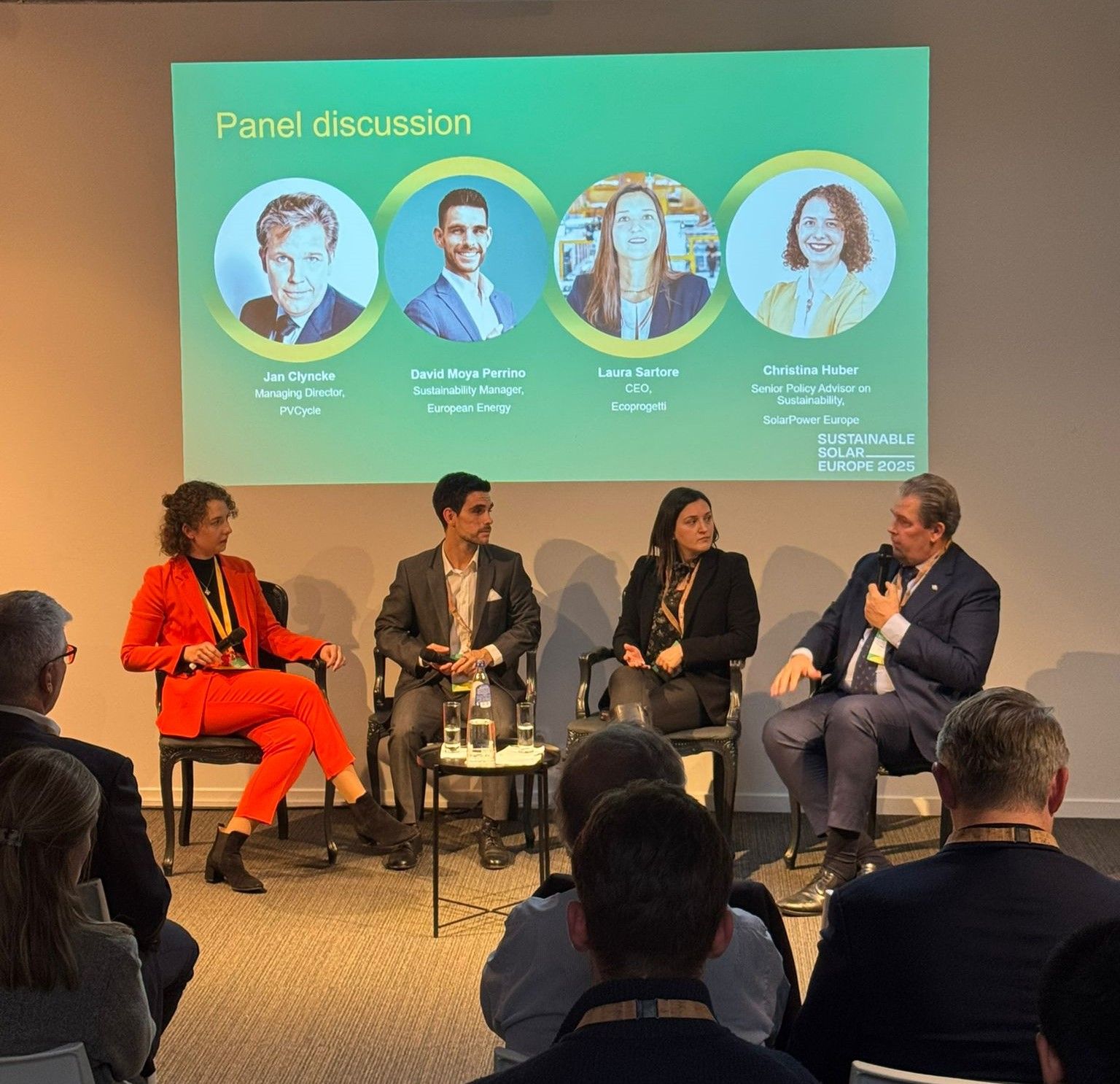
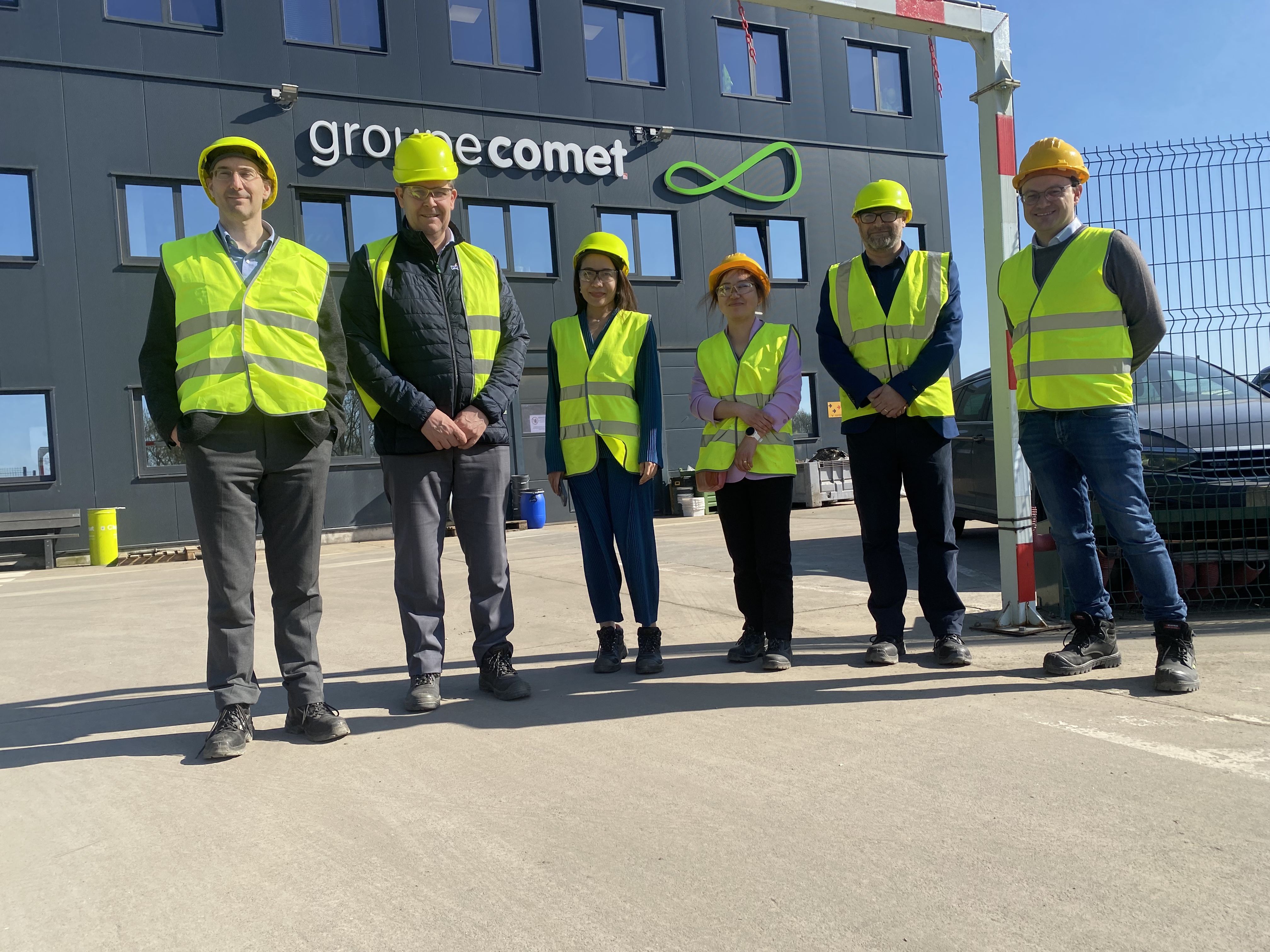
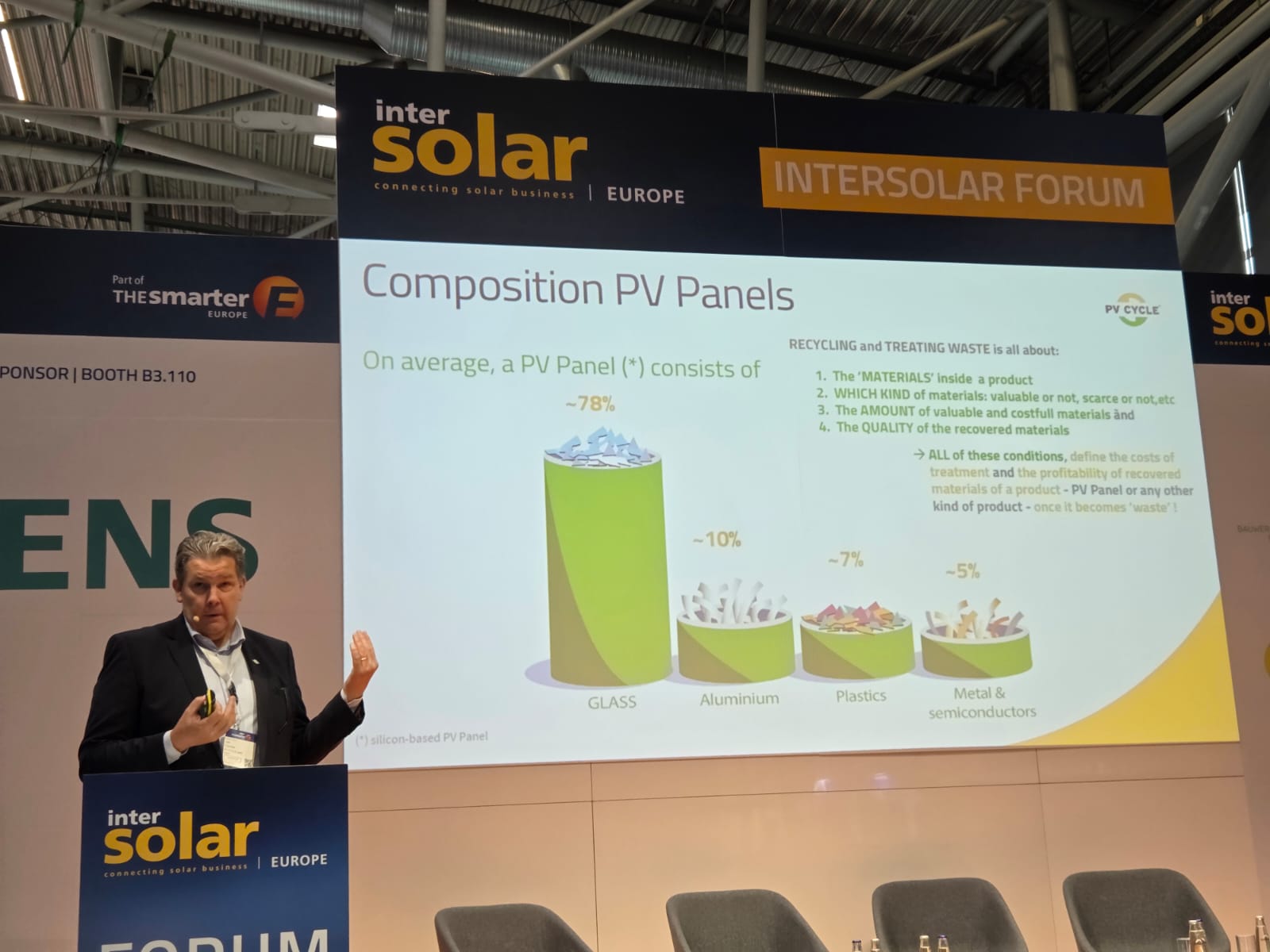
Representing our members’ end-of-life commitment towards society and the authorities, PV CYCLE also invests in awareness campaigns and speaks each year at numerous European and international conferences and events.
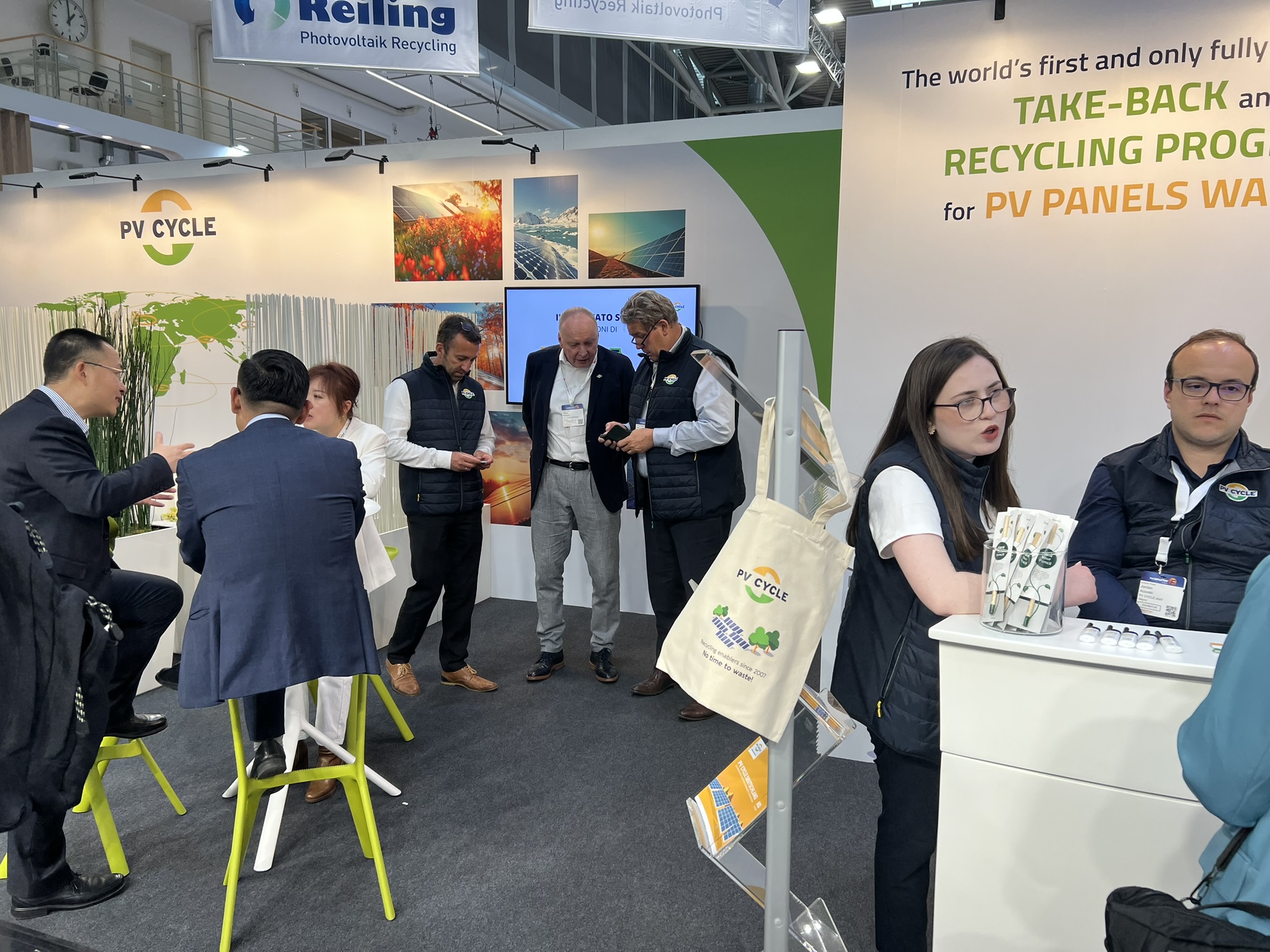
We had the opportunity, through many occasions, to meet our customers and
partners at multiple exhibitions.
We were present at:
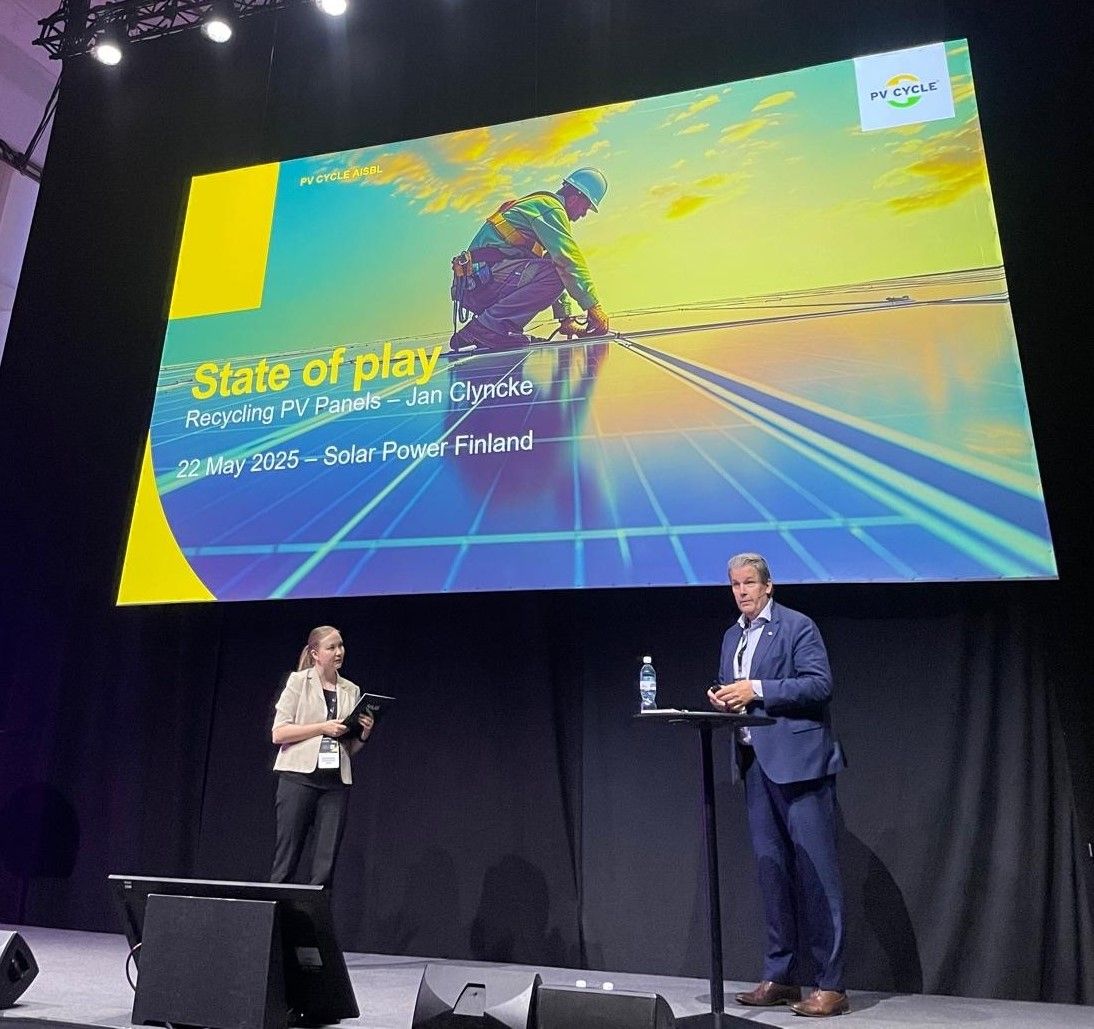
INTERSOLAR Europe (Munich), ECOMONDO (Italy),
KEY ENERGY (Italy), InterSolution (Belgium),
Solar Solutions (Belgium),
Circular Energy Conference (South Africa),
E-WASTE Expo (Germany), Quality Summit (Spain),
RESOLAR (United Kingdom), Sustainable Solar
(Belgium) and Solar Power Finland.
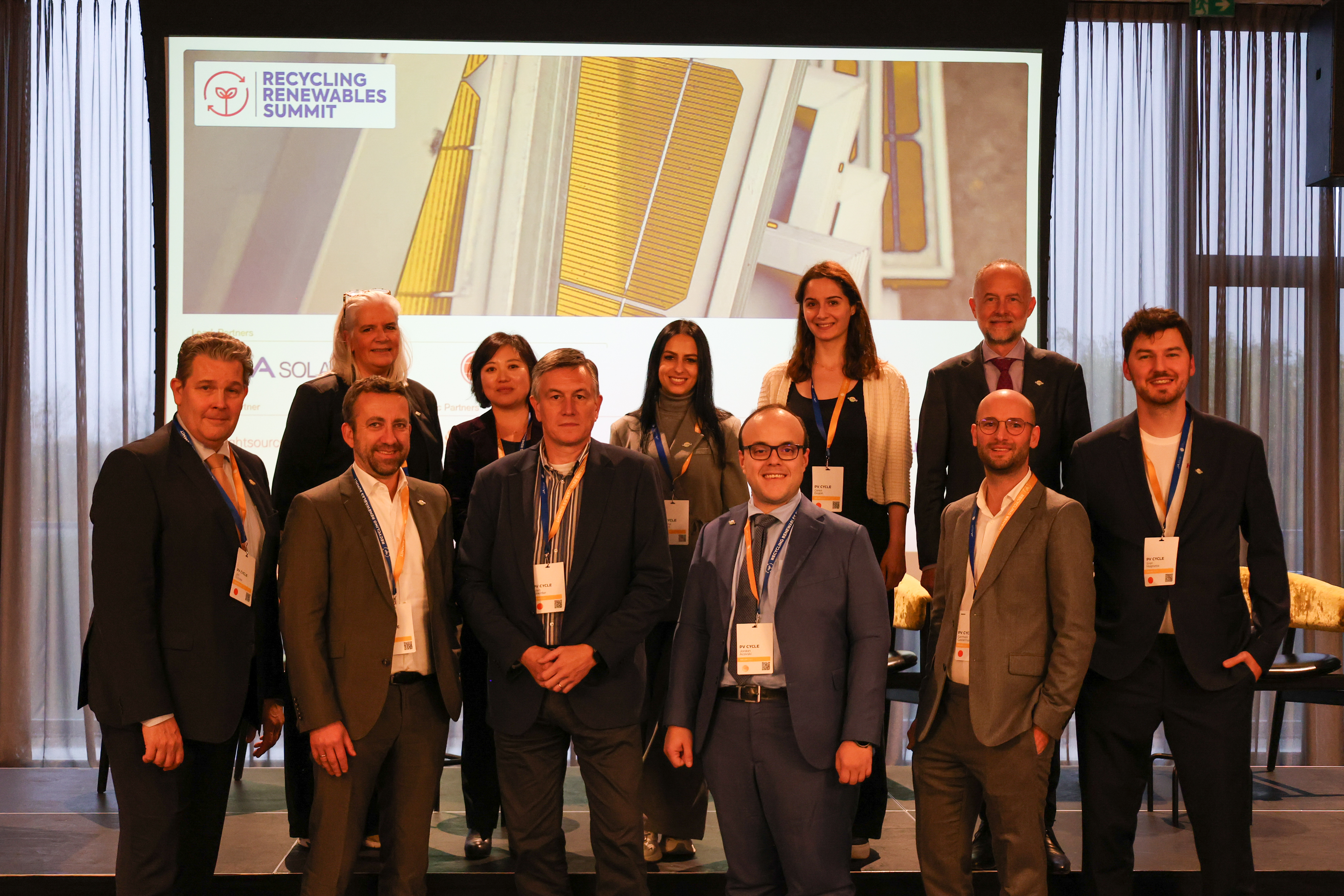
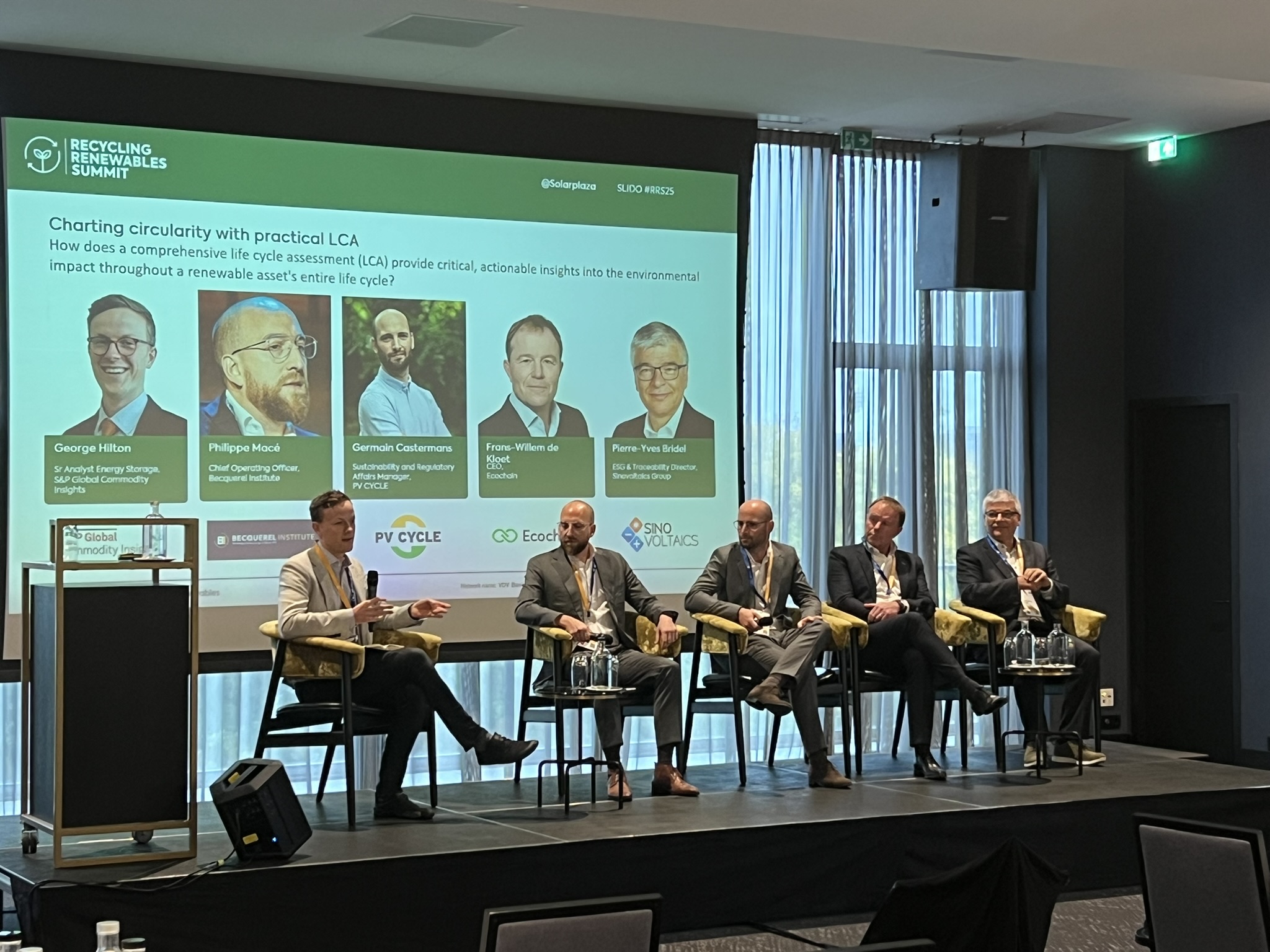
Last year, PV CYCLE co-organized, together with SolarPlaza, the second edition of the “Recycling Renewables Summit” — a high-quality and successful event that brought together leading experts to collectively shape the future of recycling in the renewable energy sector.
This second edition also reinforced our vision for the years ahead: to fully focus this event on solar energy, which remains our core area of expertise. As a result, we have decided to rename the 2026 edition the Recycling Solar & BESS Summit, which will feature highly specialised industry experts addressing the technical, regulatory, and circularity challenges related to the recycling of PV panels and Battery Energy Storage Systems.
Furthermore, we continue to communicate without borders through our LinkedIn page, which now has over 6.200 members: https://www.linkedin.com/company/pv-cycle/
We have disseminated more than 35 newsletters across all entities to our members, with excellent opening rates.
We have successfully renewed our ISO 9001 and ISO 14001 certifications and we remain proud to continue operating in line with high quality and environmental standards.